AI calling is quickly becoming one of the most powerful tools for modern businesses that rely on phone communication. By exploring virtual assistant tools and leveraging AI applications in business, companies can enhance customer support, sales, appointment reminders, and follow-ups. For example, many organizations are using advanced computing solutions for AI tasks to manage complex voice interactions efficiently.
Intelligent voice agents are transforming how businesses interact with their customers every day. Companies can improve performance with supercomputer hardware for AI applications, enabling faster and more accurate automated responses. At the same time, marketers are discovering digital marketing methods to retain customers that work well with AI calling systems.
Instead of waiting on hold for a human agent, callers can now engage with a natural, conversational system powered by artificial intelligence. Many businesses are using marketing runners services for outreach campaigns to connect AI calling with personalized customer communication. Meanwhile, finance leaders are consulting online resources for financial technology information to make smart investments in AI tools.
For businesses, this means faster service, lower costs, and a better overall customer experience, all while staying competitive in a rapidly evolving market.
Top 10 AI Calling Contact Center Solutions for Businesses
When it comes to modern contact center solutions, AI calling is transforming how businesses interact with customers. From intelligent routing to automated follow-ups, these platforms help organizations provide faster service, reduce costs, and improve overall customer satisfaction. Below is a curated list of the top 10 AI calling solutions in the market.
1. Bright Pattern – AI Contact Center Solutions
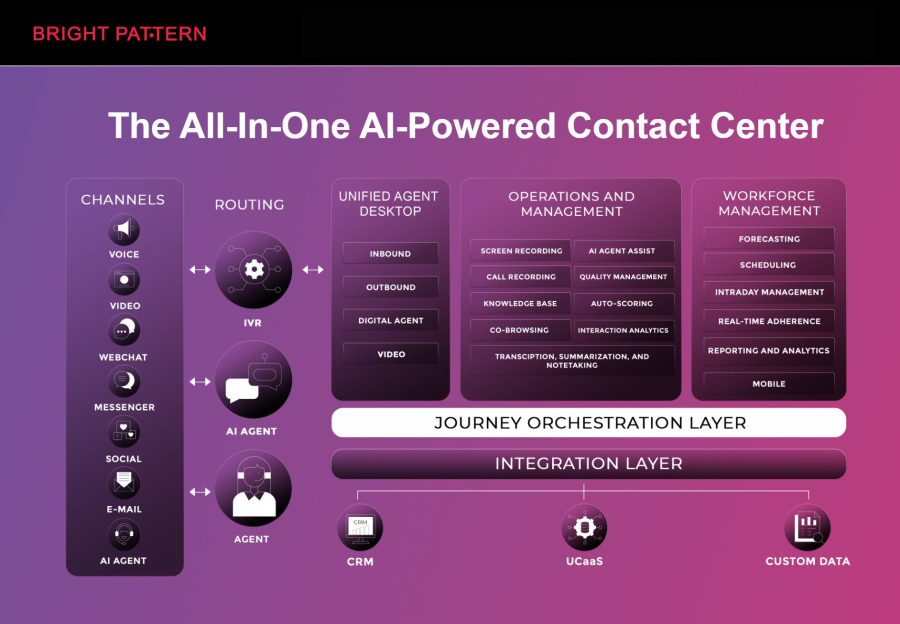
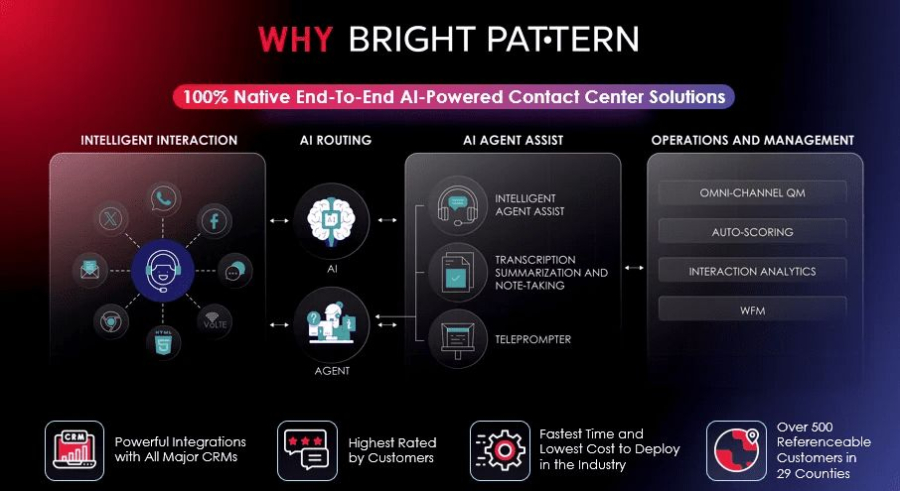
Bright Pattern stands out as a top choice for businesses looking to implement AI-driven call center solutions. Its platform combines advanced AI calling capabilities with a flexible, cloud-based contact center environment. Key features include:
- Omnichannel support: Handle calls, chats, emails, and messaging apps from a single interface
- Intelligent routing: Connect customers to the right agent or automated system based on AI predictions
- Virtual assistant integration: Automate common inquiries and follow-ups with conversational AI
- Real-time analytics: Monitor performance metrics and improve customer experience with actionable insights
Bright Pattern’s AI contact center platform is designed to scale with your business, making it ideal for companies of all sizes looking to modernize their customer service operations.
2. Genesys Cloud CX
Genesys Cloud CX offers AI-powered contact center solutions that help businesses automate interactions while maintaining a human touch. It features predictive routing, chatbots, and detailed reporting tools to optimize agent performance.
3. Five9 Intelligent Cloud Contact Center
Five9 provides a comprehensive AI calling platform that supports omnichannel communication, AI-driven analytics, and intelligent automation to enhance customer engagement and streamline operations.
4. Talkdesk CX Cloud
Talkdesk offers AI-enhanced call center solutions, including virtual assistants, speech analytics, and workflow automation to improve agent efficiency and customer satisfaction.
5. Cisco Contact Center AI
Cisco’s AI contact center solutions focus on natural language understanding, virtual agents, and AI-assisted routing to deliver faster, more accurate responses to customer inquiries.
6. NICE inContact CXone
NICE inContact CXone leverages AI calling for predictive routing, chatbots, and advanced analytics, allowing businesses to manage high volumes of customer interactions efficiently.
7. 8x8 Contact Center AI
8x8 provides AI-powered contact center tools, including intelligent virtual assistants, sentiment analysis, and automation features to enhance the customer experience.
8. RingCentral Contact Center
RingCentral integrates AI calling with omnichannel support and analytics, helping businesses reduce call handling time and improve service quality.
9. Avaya OneCloud CCaaS
Avaya OneCloud CCaaS offers AI-driven contact center solutions with intelligent routing, virtual agents, and reporting tools designed to optimize customer engagement.
10. Zendesk AI Contact Center
Zendesk combines AI calling, chatbots, and workflow automation to help businesses resolve customer inquiries faster while maintaining personalized service.
What Is AI Calling?
AI callingrefers to the use of artificial intelligence to handle phone calls that would traditionally require a human agent. These systems can understand spoken language, respond naturally, access data from your systems, and complete tasks such as answering questions, booking appointments, or qualifying leads.
Typically, AI calling solutions combine several technologies:
- Speech recognitionto convert spoken words into text.
- Natural language understanding(NLU) to interpret what the caller means, not just what they say word-for-word.
- Dialogue managementto decide how the system should respond in a natural, helpful way.
- Text-to-speech(TTS) to turn AI-generated responses into lifelike spoken audio.
- Integrationswith CRMs, helpdesks, booking tools, and other business systems to actually perform actions for the caller.
The result is a voice agent that can answer, route, and even complete calls automatically, with minimal or no human involvement.
The Biggest Benefits of AI Calling for Businesses
AI calling technology delivers a wide range of advantages. When implemented thoughtfully, it can become a reliable, always-available extension of your team.
1. 24/7 Availability Without Extra Headcount
Customers expect support and information any time of day. WithAI callingin place, your business can answer calls around the clock, including evenings, weekends, and holidays, without hiring additional staff or paying overtime.
- Never miss important calls after hours.
- Capture leads even when your sales team is offline.
- Offer consistent support across time zones.
2. Lower Operational Costs
Handling every incoming and outgoing call with human agents can become expensive and difficult to scale. AI voice agents can manage high volumes of repetitive calls at a fraction of the cost.
- Reduce call center staffing needs for routine inquiries.
- Lower training and onboarding costs for new agents.
- Scale up or down during peak seasons without frantic hiring.
3. Faster Response Times and Shorter Queues
Long hold times frustrate customers and damage your brand. An AI caller can respond instantly, handle multiple calls in parallel, and resolve straightforward requests in seconds.
- Cut average wait times dramatically.
- Decrease call abandonment rates.
- Improve first-contact resolution for simple requests.
4. Consistent, High-Quality Service
Human performance varies from day to day. AI calling systems deliver the same quality of service every time, following your approved scripts and workflows without deviation.
- Ensure compliant, on-brand messaging on every call.
- Standardize how common questions and objections are handled.
- Reduce the risk of human error on repetitive tasks.
5. Happier Human Agents
AI calling is not about replacing people; it is aboutaugmentingthem. When AI handles repetitive, low-value calls, your human agents can focus on complex, high-impact conversations.
- Free your team from repetitive FAQs and simple updates.
- Let agents spend more time on strategic, relationship-building work.
- Boost job satisfaction and reduce burnout.
6. Better Insights From Every Call
Because AI systems process calls digitally, they can automatically capture transcripts, categorize conversations, and generate analytics. This creates a rich source of data to improve operations and customer experience.
- Understand why customers call and how often.
- Identify common issues to fix upstream.
- Spot trends across locations, products, or campaigns.
Real-World Use Cases for AI Calling
AI calling is flexible and applies to many industries and business models. Here are some of the most impactful ways companies are using it today.
Customer Support and Helpdesks
Support teams often receive large volumes of repetitive calls, such as password resets, order status checks, and basic troubleshooting. AI calling can:
- Answer common questions automatically.
- Check order status, shipping details, or account balances.
- Route complex cases to the right human agent with context.
Sales and Lead Qualification
For sales-driven organizations, AI calling becomes a tireless pre-sales assistant.
- Call inbound leads quickly to qualify interest.
- Ask pre-defined questions and score leads.
- Book demos or appointments directly into calendars.
Appointment Booking and Reminders
Service-based businesses such as clinics, salons, repair services, and professional practices benefit enormously from automated appointment workflows.
- Book or reschedule appointments over the phone without a human receptionist.
- Send reminder calls to reduce no-shows.
- Confirm attendance or offer alternative time slots automatically.
Order Management and Delivery Updates
Retailers, restaurants, and logistics providers can use AI calling to keep customers informed and confident.
- Provide automated updates on order or delivery status.
- Notify customers of delays and offer options.
- Confirm address details or delivery windows.
Billing and Payment Support
Billing questions can overwhelm finance and customer care teams. AI calling can help:
- Answer basic billing inquiries and due dates.
- Explain charges or summarize recent activity.
- Guide customers through secure payment workflows where appropriate.
Internal IT and HR Service Desks
AI calling is not just for external customers. Many organizations deploy voice agents internally to support employees.
- Help staff reset passwords or unlock accounts.
- Answer policy questions about benefits, leave, or expenses.
- Route internal tickets to the right department.
How AI Calling Works Behind the Scenes
While AI calling feels simple to the caller, there is a sophisticated process running beneath every interaction. Understanding the basics helps you see where the technology fits in your operations.
- The call is received or initiated.The AI system either answers an incoming call or dials out based on your rules or campaigns.
- Speech recognition transcribes the caller's voice.The system converts spoken audio into text in real time, including different accents, speeds, and phrasings.
- Natural language understanding interprets intent.The AI identifies what the caller wants, such as checking an order, booking an appointment, or speaking with sales.
- Business logic determines the next step.Based on your configured workflows, the system decides how to respond or which action to take.
- Integrations retrieve or update data.The AI may look up information in your CRM, booking system, or internal database and perform actions such as creating a ticket or updating an order.
- Text-to-speech delivers a humanlike response.The AI generates a natural language answer and speaks it back to the caller almost instantly.
This loop continues throughout the call, giving the impression of a natural, back-and-forth conversation that smoothly advances toward resolution.
Key Features to Look For in an AI Calling Solution
Not all AI calling platforms are the same. When evaluating options, consider features that directly support your business goals and customer expectations.
1. Natural, Humanlike Voice Quality
Clear, pleasant voices help callers feel comfortable and understood. Look for systems with realistic text-to-speech options, support for multiple languages, and the ability to adjust tone and pacing.
2. Strong Language Understanding
Effective AI calling depends on accurately understanding what callers mean. Robust natural language understanding should handle everyday phrases, synonyms, and different ways of asking the same question.
3. Flexible Call Flows and Customization
Your business has unique processes. Choose a solution that lets you design custom call flows, scripts, and rules without requiring deep technical skills.
4. Easy Integrations With Existing Tools
The real power of AI calling emerges when it connects to your existing systems.
- Customer relationship management tools.
- Ticketing or helpdesk platforms.
- Booking and scheduling software.
- Internal databases and custom applications.
5. Intelligent Call Routing and Escalation
Sometimes customers still need a human. A good AI calling system recognizes these moments and transfers callers smoothly.
- Seamless handoffs to live agents with call context.
- Skills-based routing to the right department or person.
- Configurable rules for when and how to escalate.
6. Reporting and Analytics
Visibility into performance is crucial for continuous improvement. Look for:
- Call volume, duration, and resolution rates.
- Top intents and reasons for calling.
- Customer satisfaction indicators such as post-call surveys.
7. Compliance and Security Controls
Phone calls often involve sensitive information. Your AI calling setup should support compliance with relevant regulations and best practices, such as access controls, audit logs, and data protection features suitable for your region and industry.
AI Calling vs. Traditional Call Centers
AI calling does not replace traditional call centers entirely; it enhances them. This simple comparison highlights how the approaches complement each other.
|
Aspect |
Traditional Call Center |
AI Calling |
|
Availability |
Business hours; extended hours require more staff. |
24/7, including nights, weekends, and holidays. |
|
Scalability |
Limited by number of agents on shift. |
Handles many calls in parallel without extra headcount. |
|
Consistency |
Varies with agent experience and training. |
Delivers the same approved messaging every time. |
|
Best Use |
Complex, emotional, or high-stakes conversations. |
Repetitive, structured, and information-based calls. |
How to Get Started With AI Calling
Implementing AI calling is most successful when you start small, learn from real calls, and expand deliberately. Here is a practical approach.
Step 1: Define Clear Objectives
Begin by clarifying what you want AI calling to achieve. For example:
- Reduce average response time for customer support.
- Increase lead contact rate for inbound inquiries.
- Cut no-show rates through proactive reminders.
Step 2: Identify High-Impact Call Types
Look for call categories that are frequent, repetitive, and follow predictable patterns. These are prime candidates for AI.
- Order status requests.
- Appointment changes.
- Basic product or service questions.
Step 3: Map Out Your Ideal Call Flows
Sketch how a perfect call should go from the caller's perspective. Define:
- The greeting and tone of voice you want.
- Key questions to ask and information to provide.
- Decision points where the AI chooses the next step.
- Situations where the call should be handed to a human.
Step 4: Connect Your Systems
Work with your technical team or provider to connect the AI calling platform to your existing tools. Start with the integrations that will unlock the most value, such as customer records or scheduling.
Step 5: Launch a Pilot and Learn
Begin with a limited pilot rather than a full-scale rollout. For instance, deploy AI calling for one specific call type, department, or location.
- Monitor call recordings and transcripts.
- Fine-tune scripts and flows based on real interactions.
- Gather feedback from both customers and agents.
Step 6: Expand and Optimize
Once your pilot is working smoothly, expand AI calling to more use cases. Continue to refine language, routing, and integrations as you gather more data and insights.
Best Practices for a Great AI Calling Experience
To unlock the full value of AI calling and delight your customers, keep these best practices in mind.
Be Transparent With Callers
Let callers know they are interacting with an intelligent system, and emphasize the benefits they receive, such as faster responses and 24/7 availability. Clear expectations build trust.
Design Conversations, Not Menus
Avoid recreating rigid menu systems. Instead, let callers speak naturally and design your AI to handle conversational input like, "I want to change my appointment" or "I'm checking on an order."
Make Escalation Easy
Ensure there is always a clear path to a human when needed. The AI should recognize frustration, confusion, or complex requests and transfer gracefully, passing along relevant context to save time.
Train With Real Data
Use real call transcripts and historical data to train and refine your AI calling models where possible. This helps the system handle your specific customer phrases, regional language, and common questions more accurately.
Measure What Matters
Track metrics that reflect both efficiency and customer satisfaction, such as:
- Average handling time.
- Containment rate (calls fully handled by AI).
- Transfer rate to human agents.
- Customer satisfaction scores or surveys.
Frequently Asked Questions About AI Calling
Will AI calling replace human agents?
AI calling is best used as apartnerto human agents, not a replacement. It excels at repetitive, high-volume tasks, letting your team focus on nuanced, relationship-driven conversations where human empathy makes all the difference.
Is AI calling complicated to implement?
The implementation journey depends on your goals and systems, but many modern platforms are designed to be approachable. Starting with a focused use case and working in phases helps keep complexity manageable and results visible.
How do customers feel about talking to AI on the phone?
Customer acceptance has grown rapidly, especially when AI calling is fast, helpful, and transparent. When callers can resolve issues quickly without waiting on hold, they often view the experience positively.
Can AI calling support multiple languages?
Many AI calling solutions support multiple languages and dialects, although the availability and quality can vary. If you serve multilingual customers, verify language support during evaluation and testing.
Is AI calling only for large enterprises?
No. While large enterprises were early adopters, AI calling is increasingly accessible to small and midsize businesses thanks to cloud-based solutions and flexible pricing models. Even a small team can benefit from automation of high-volume, routine calls.
Unlocking the Future of Customer Conversations
AI calling is reshaping how businesses connect with customers, blending the speed and consistency of automation with the intelligence to handle real conversations. By offloading repetitive tasks, keeping phone lines open 24/7, and surfacing powerful analytics, it allows your team to focus on what they do best: building strong, human relationships.
Whether you are running a bustling contact center, a local service business, or a growing online brand, now is the time to explore how AI calling can simplify operations, delight your customers, and give your business a lasting competitive edge.
